
Description
🧾 What is it used for?
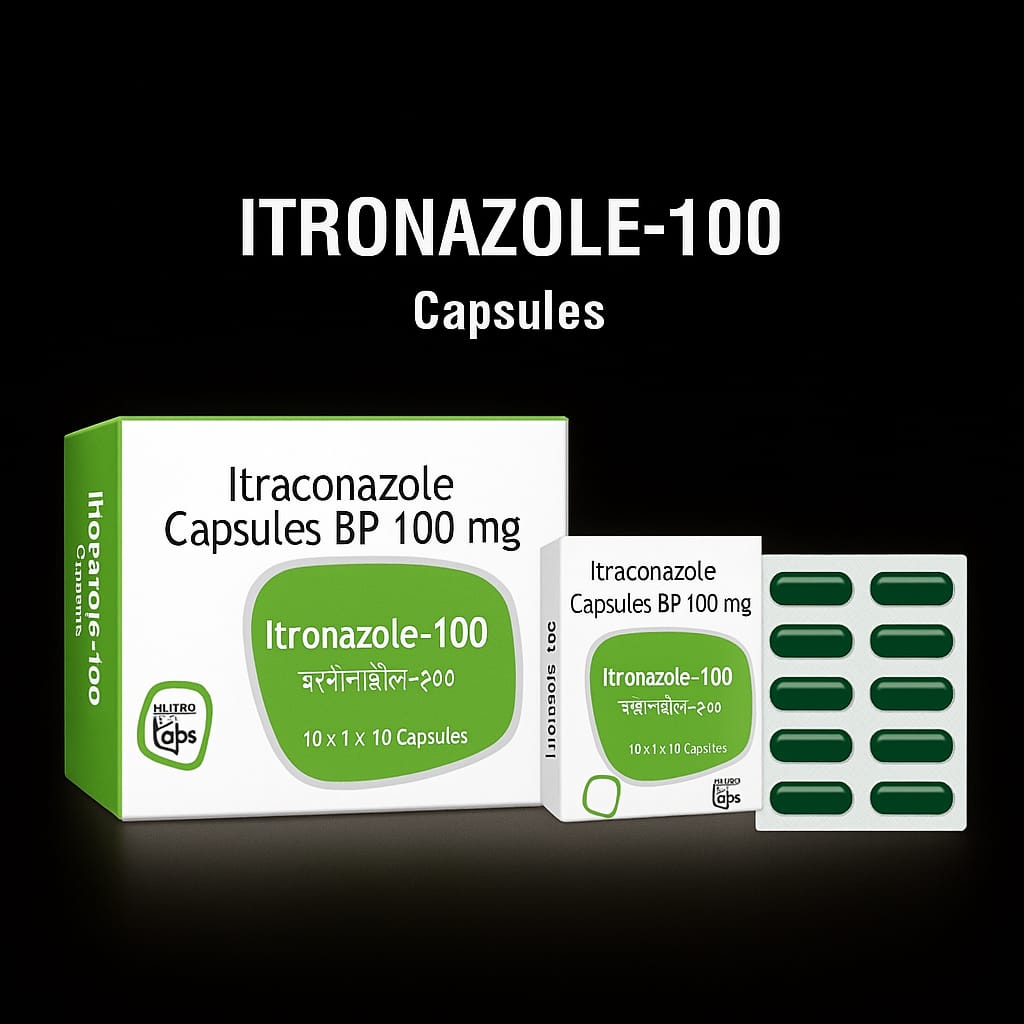
ITRONAZOLE-100 Tablet by Austro Lab contains Itraconazole 100 mg, which is a broad-spectrum antifungal medicine. It works by stopping the growth of fungi by interfering with their cell membranes.
It is used to treat fungal infections such as:
Skin infections: Tinea corporis (ringworm), Tinea cruris (jock itch), Tinea pedis (athlete’s foot)
Nail infections (onychomycosis)
Oral and esophageal candidiasis (mouth/throat fungal infections)
Vaginal candidiasis
Systemic fungal infections such as histoplasmosis, aspergillosis (in serious cases)
⚠️ Common Side Effects
Most users tolerate it well, but some may experience:
Nausea or vomiting
Stomach pain or discomfort
Diarrhea or constipation
Headache
Dizziness or tiredness
Skin rash or itching
Taste disturbances
🚨 Serious Warnings & Precautions
Liver toxicity: Can cause serious liver damage; monitor liver function if used long-term or in patients with pre-existing liver issues
Heart issues: May worsen congestive heart failure (CHF); avoid in such patients unless absolutely necessary
Drug interactions: Itraconazole is known for multiple serious interactions (especially with heart, cholesterol, and psychiatric medications)
Hearing loss: Rarely, reversible or irreversible hearing loss has been reported
Neuropathy: Tingling, numbness, or nerve pain may occur with prolonged use
🔄 Drug & Food Interactions
Antacids/acid reducers (e.g., omeprazole, ranitidine): Reduce absorption of itraconazole—avoid using these within 2 hours
Statins (cholesterol medicines): Risk of muscle damage—avoid unless doctor approves
Heart rhythm drugs (e.g., quinidine, dofetilide): Dangerous QT prolongation risk—contraindicated
Rifampin or phenytoin: Reduce the effect of itraconazole
Alcohol: May increase risk of liver damage
Grapefruit juice: Can increase blood levels of the drug—avoid
👥 Cautionary Groups
Pregnancy: Not recommended unless life-threatening fungal infection is present
Breastfeeding: Avoid—may pass into breast milk
Children: Use only if clearly needed and prescribed
Elderly: Increased risk of side effects—monitor closely
Patients with liver, kidney, or heart disease: Use with strict medical supervision
✅ Tips for Safe Use
Take after a full meal for better absorption
Do not crush or chew the tablet—swallow whole
Avoid antacids or acid-reducing agents 2 hours before/after
Monitor liver function tests if taking long-term
Report unusual symptoms: yellowing eyes/skin, dark urine, persistent fatigue
Avoid self-medication or stopping abruptly—complete the full course
📌 When to Consult a Doctor Immediately
Yellowing of skin or eyes (liver dysfunction)
Persistent nausea, vomiting, or abdominal pain
Irregular heartbeat, chest pain, or shortness of breath
Hearing problems or ringing in ears
Severe skin reactions (rash, peeling, blisters)
🧠 Summary Table
| Category | Details |
|---|---|
| Active Ingredient | Itraconazole 100 mg (antifungal) |
| Uses | Fungal infections: skin, nails, mouth, vagina, systemic |
| Common Side Effects | Nausea, stomach pain, headache, rash |
| Serious Risks | Liver damage, heart failure, drug interactions |
| Interactions | With antacids, statins, heart meds, alcohol, grapefruit juice |
| Precautions | Avoid in pregnancy, liver/heart issues, children without medical advice |




Reviews
There are no reviews yet.